+64 9 551 5165

International Financial Reporting Standard (IFRS) for Small and Medium-sized Entities (SMEs)
The IFRS for SMEs is a self-contained Standard (less than 250 pages), designed to meet the needs and capabilities of small and medium-sized entities (SMEs), which are estimated to account for over 95 per cent of all companies around the world.
The Standard is available for any jurisdiction to adopt, whether or not it has adopted full IFRS. Each jurisdiction must determine which entities should use the Standard. The IASB's only restriction is that entities that have public accountability should not use it.
In May 2015, the IASB completed a comprehensive review of the IFRS for SMEs and made limited amendments to the Standard.
For more information click here.
IRD: Financial reporting for companies
For income years starting on 1 April 2014 and later companies (including look-through companies) with annual revenue of $30 million or less, and assets of $60 million or less, must prepare financial accounts that meet our minimum financial reporting requirements. These thresholds apply to all companies in a group where the parent company is incorporated in New Zealand.
For subsidiaries of multi-national companies the levels are: annual revenue of $10 million or less, and assets of $20 million or less.
The following companies are required to prepare financial statements to a higher standard of accounting, These companies must prepare general purpose financial reports using the standards mandated by the External Reporting Board (XRB). Separate financial accounts do not need to be prepared for us.
• Large companies with income of more than $30 million or assets of more than $60 million. • New Zealand subsidiaries of multi-nationals with income of more than $10 million or assets of more than $20 million. • Issuers. • Companies with ten or more shareholders (unless they opt out). • Companies with fewer than ten shareholders who opt in.
Small companies are not required to prepare financial accounts if during the income year they:
• are not part of a group of companies, and • haven't derived income in excess of $30,000, and • haven't incurred expenditure in excess of $30,000.
For more information click here.
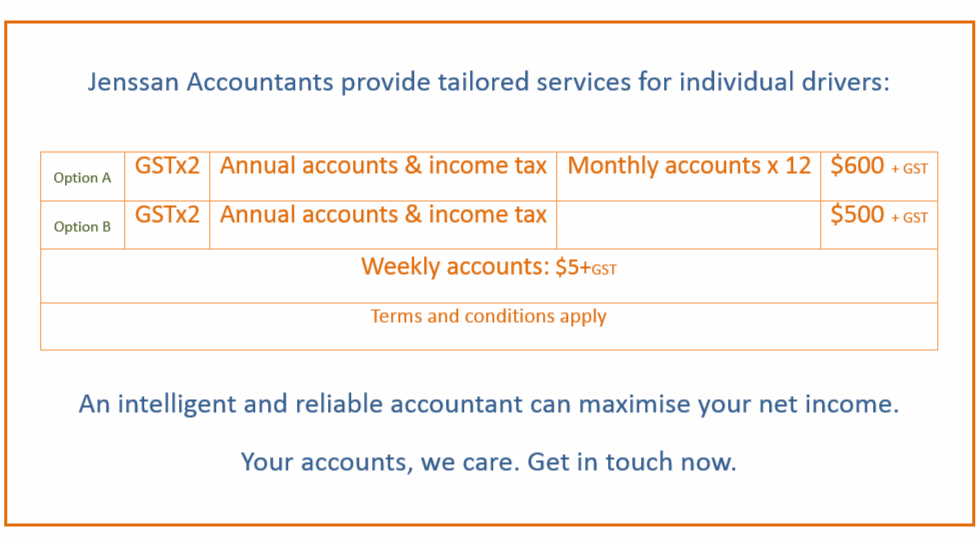
Message to individual drivers:
IRD: Income tax treatment of software development expenditure
This issues paper has been released to initiate discussion about the appropriate income tax treatment of expenditure incurred to develop software for commercial exploitation. It considers the Commissioner’s current approach which treats software development expenditure as the cost of producing trading stock (published in the appendix to Tax Information Bulletin Vol 4, No 10 (May 1993)). The initial view expressed in the issues paper is that the current approach may not always be the appropriate treatment, depending on how the software is to be commercially exploited.
Until a final view is reached, there is no change in the scope of the existing approach. For more information click here.
[Updated July 2016]